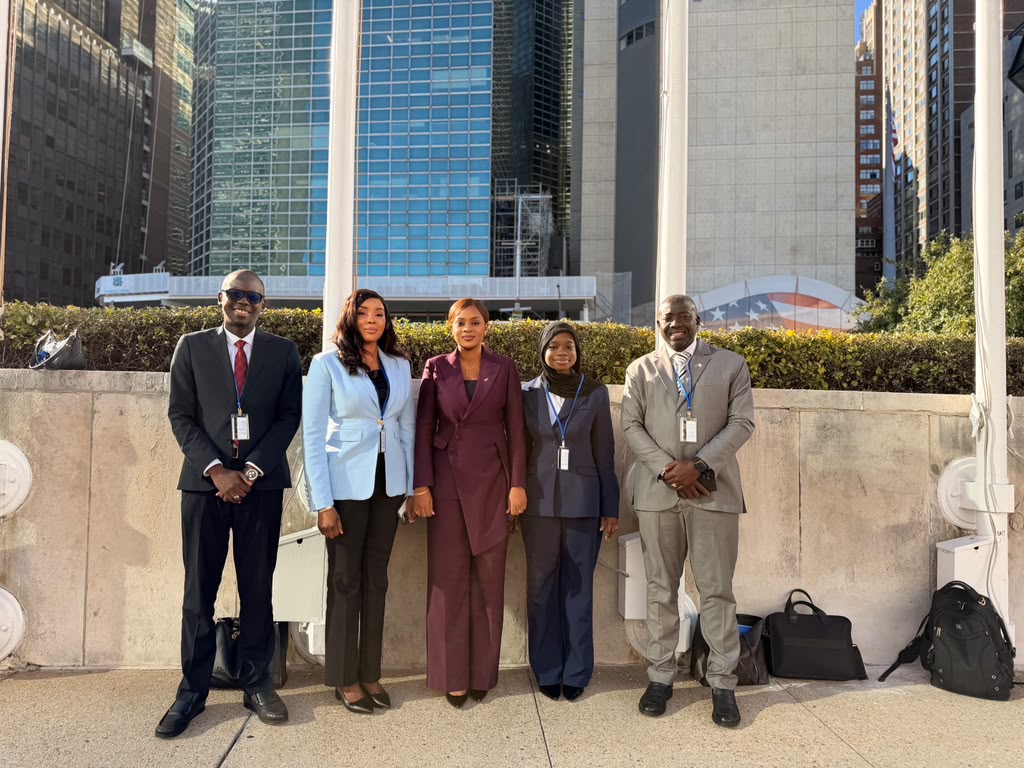
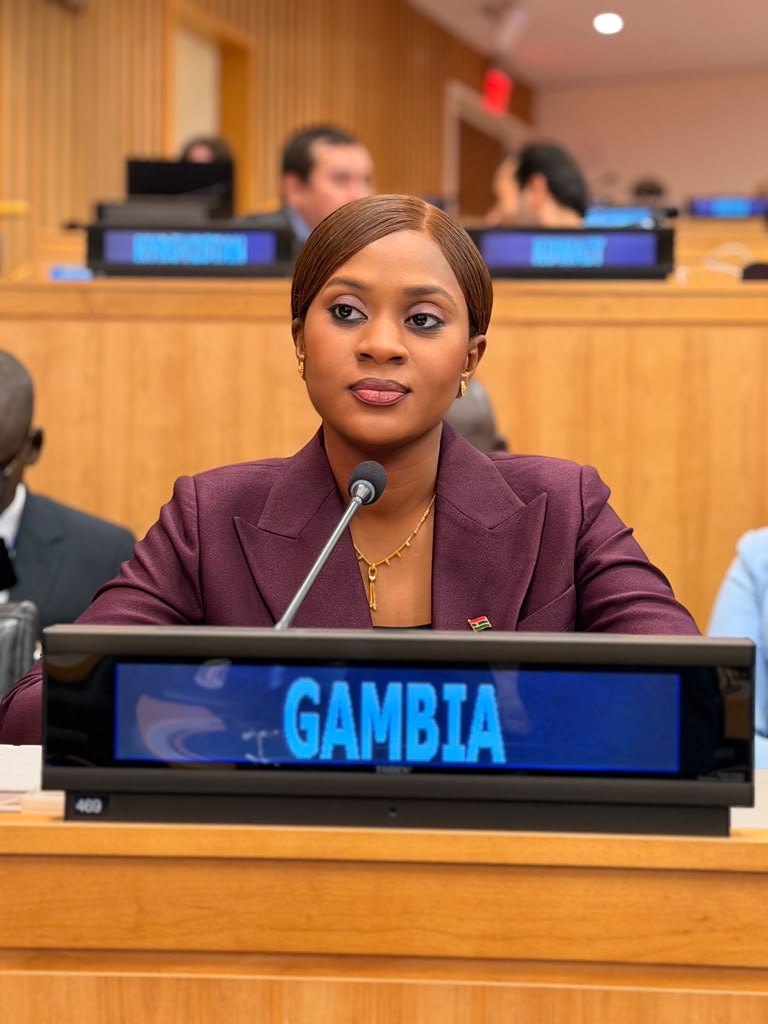
As the United Nations General Assembly transitions from its High-Level Week to substantive deliberations, Ms. Fatou Kinneh Jobe, Permanent Secretary II at the Ministry of Foreign Affairs, International Cooperation and Gambians Abroad on Tuesday, 6th October 2026 delivered The Gambia’s national statement during the General Debate of the Economic and Financial Committee (Second Committee) of the 81st Session of the United Nations General Assembly in New York.
In her address, PS Jobe reaffirmed The Gambia’s commitment to multilateral cooperation and the implementation of the 2030 Agenda for Sustainable Development, while highlighting the persistent challenges confronting developing countries, including rising debt burdens, limited access to affordable development financing, climate change, poverty and food insecurity.
She highlighted The Gambia’s election as Chair of the Group of Least Developed Countries (LDCs), describing it as both an honor and a responsibility, and reaffirmed the country’s commitment to advancing the collective interests and development aspirations of LDCs through innovative and timely solutions.
PS Jobe called for comprehensive and effective solutions to debt sustainability, alongside reforms to the international financial architecture, greater access to affordable and long-term financing, strengthened international tax cooperation and the fulfilment of Official Development Assistance commitments. She also emphasized the importance of more predictable climate financing and stronger resilience for countries most vulnerable to the impacts of climate change.
Highlighting The Gambia’s national development efforts, PS Jobe referenced the Recovery-Focused National Development Plan, YIRIWA 2023–2027, which prioritizes renewable energy and expanded electricity access, education and healthcare, agricultural productivity and value addition, and digital connectivity. She also highlighted ongoing reforms aimed at strengthening national institutions, improving public sector effectiveness, and enhancing transparency, accountability and tax administration.
In closing, she stressed that, with the 2030 Agenda for Sustainable Development deadline fast approaching, implementation must remain the priority, calling for existing commitments to be translated into concrete and meaningful development outcomes. She reaffirmed The Gambia’s commitment to working with all partners towards a more sustainable future for all.